Greenland Facts

Explore Greenland’s history and the connections linking Greenland, Denmark, and the United States.

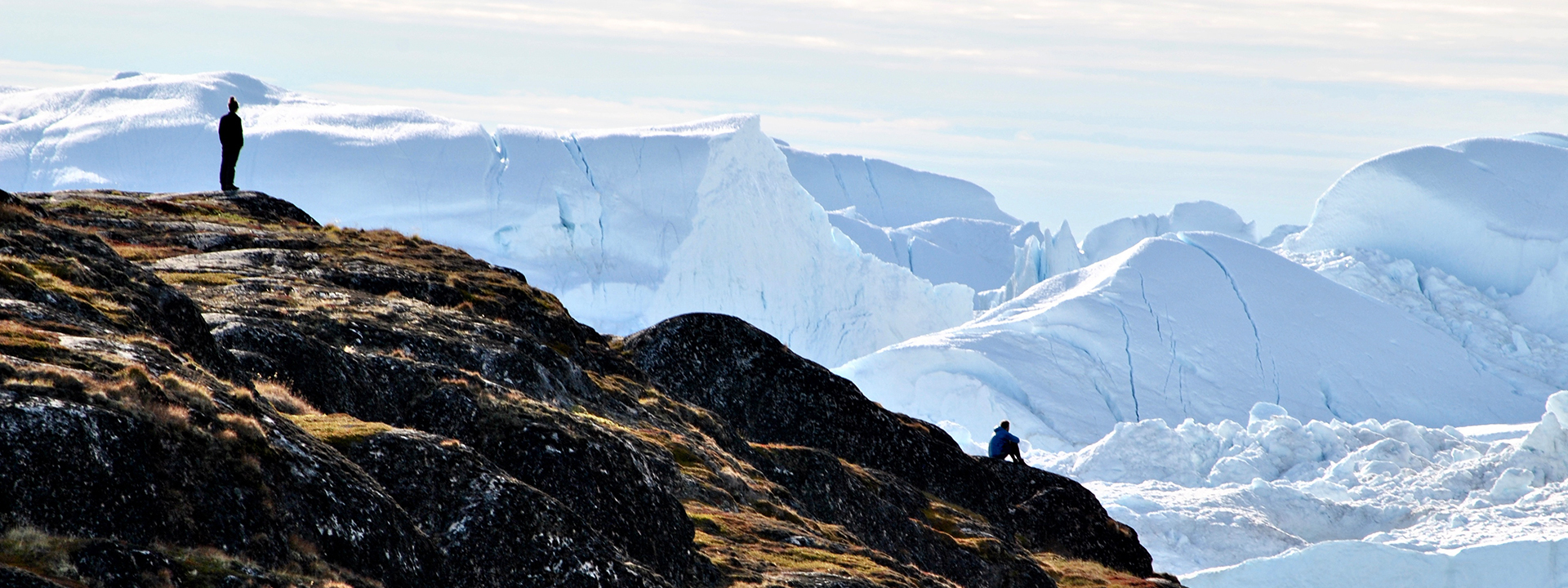
Greenland landscape with boardwalk and glacier

A History of Friendship

For 225 years, the United States has enjoyed an unbroken diplomatic bond with Denmark, longer than with any other nation. This friendship has supported economic, cultural, and military partnerships through many decades.

After the attacks of September 11, 2001, Denmark was among the first allies to answer the call. Danish forces deployed to Afghanistan alongside Americans. The cost was steep; Denmark lost more soldiers per capita than any other NATO member.

Greenland has been part of the Kingdom of Denmark for centuries.  This relationship has been recognized by US administrations, the United Nations, and international law for decades.

As a self-governing territory within the Kingdom of Denmark, Greenlanders hold the power to chart their own course.

  • All five parties in the Parliament of Greenland oppose becoming American territory.
  • The vast majority of Greenlanders voted to maintain within the Danish realm.
  • The decision remains theirs to make.

For more than 80 years, Denmark, Greenland, and the United States have had a successful security partnership in the Arctic.  This history of friendship offers a foundation on which to address security challenges in the Arctic as partners and allies.
Quick Facts

Population: Approximately 57,000 people (2024)

Size: 836,330 square miles — roughly three times the size of Texas, or about the same as Mexico

Geography: World’s largest island; 80% covered by ice sheet; located between the Arctic and Atlantic oceans

Capital: Nuuk (population approximately 19,000)

Main cities: Nuuk, Sisimiut, Ilulissat, Qaqortoq — most settlements accessible only by boat, helicopter, or plane

Languages: Kalaallisut (Greenlandic), Danish, English

Status: Autonomous territory (since 2009) within the Kingdom of Denmark

Economy: Fishing industry, tourism, mineral exploration; receives annual subsidy from Denmark

Resources

Filter by category:

What climate change means for Greenland's traditional Inuit lifestyle and the world

Greenland facts wide

Climate change is deeply affecting both the traditional Inuit lifestyle in Greenland — disrupting ice-dependent culture and mobility — and contributing to global environmental changes with consequences far beyond the Arctic.

> Read More

Inuit Collectivity as Resilience

Watch this video of Nauja Bianco's talk at the Nordic Innovation Summit held by the National Nordic Museum in 2025. Nauja Bianco is a Greenlandic expert in security and Nordic geopolitics.


> Read More

Poll: Clear majority of Greenlanders reject independence now

A poll of Greenlanders conducted between January 16 and 28, 2026, found that 62% of respondents do not want to leave the Kingdom of Denmark and become independent now.  Only 25% wish for independence now, and 13 % are undecided.  When asked if it would be an advantage for Greenland to join the US, only 8% said yes while 76% said no. 

> Read More

Greenland: French Consul General arrives in Nuuk

The French Ministry for Europe and Foreign Affairs announced the opening of the new French Consulate in Greenland.  Consul General Jean-Noël Poirier took office on February 6, 2026.  The commitment to open a consulate in Greenland was first made by French President Macron in June 2025. 

> Read More

Canadian consulate in Greenland is operational

In mid-January 2026 a new Canadian Consulate began its operations in Nuuk.  The official opening took place on February 6.  This article describes the consulate’s priorities, including Arctic emergency preparedness. 

> Read More

Canada and France open Greenland consulates after Trump demands

On February 6, 2026, both Canada and France opened consulate offices in Greenland.  This BBC article describes the formal events and the context for this growth in diplomatic outposts.  The article further describes the bonds between Greenland’s Inuit people and the Inuit in Canada who share cultural and colonial histories. 

> Read More

“Greenland” Online Exhibition

The Museum of Danish America features an online exhibition that shares the history of Greenland and its people over more than a thousand years.  Through an illustrated timeline and focused information about culture and current events, this online exhibition offers a comprehensive view of Greenland and its place in transatlantic relations. 

> Read More

U.S. Scientists in Solidarity With Greenland

This open letter is signed by 230 American scientists (as of January 25, 2026) who assert and support Greenland’s right to self-governance.  The joint statement is followed by personal messages from scientists who signed the statement, sharing their experiences of cooperation with and appreciation for the people of Greenland. 

> Read More

Greenland's National Museum and Archive

The National Museum is Greenland’s largest museum of cultural history.  It safeguards and promotes the history of Greenland, and its collections come from all over the country.  The website provides a wealth of information about the history and cultures of Greenland’s people.  Accessible in English, Danish, and Kalaallisut languages.

> Read More

"Greenland at the Crossroads" by Gordon F. Sander

Article in the Fall 2025 edition of Scandinavian Review (American Scandinavian Foundation) by Gordon F. Sander, a journalist, historian and photographer who has been writing about the Nordic and Baltic region since 1990. A long-time contributor to the Scandinavian Review, he also writes for The New York Review of Books and The Washington Post. Sander is the author of nine books, including several works of Nordic history, including “The Finnish Front Line: Kekkonen, Kennedy, and Krushchev’s Cold War Showdown,” which was published in 2025 by Cornell University Press. 

Article shared with permission from the American Scandinavian Foundation. 

> Read More

Historical Timeline

  1. 985 - Erik the Red, a Norse explorer, named the island Greenland and established European settlements that lasted until the 1400s.
  2. c. 1100 - The Inuit Thule peoples, ancestors of the current Inuit indigenous population, migrated to Kalaallit Nunaat (Greenland).
  3. 1721 - Danish missionary Hans Egede established a colony on Greenland and began Denmark’s formal claim to controlling the island.
  4. 1776 - United States of America created when the Declaration of Independence was signed on July 4.
  5. 1783 - Denmark signed its first commercial treaty with the United States.
  6. 1792 - Denmark officially recognized the United States as an independent nation.
  7. 1801 - Denmark and the United States established a diplomatic relationship, which has been the longest uninterrupted diplomatic contact between the US and any other nation.
  8. 1917 - United States purchased the Danish West Indies from Denmark, renaming them the U.S. Virgin Islands.
  9. 1940 - Nazi Germany invaded Denmark and occupied the country until the end of World War II. Danish Ambassador Henrik Kauffmann defied instructions from the Nazi-controlled government in Copenhagen and instead continued in Washington, DC, as an envoy of “the free Danish people.”
  10. 1941 - United States signed a treaty with Ambassador Kauffmann to allow a US military presence on Greenland as a “stepping stone” in the North Atlantic for transportation and communication. Greenland remained an American protectorate through the remainder of the war.
  11. 1945 - Nazi Germany surrendered control of Denmark on May 5, ending five years of occupation. Denmark regained control of Greenland. The Danish government dropped the charges of treason made against Ambassador Kauffmann.
  12. 1949 - Denmark and the United States joined 10 other nations as founding members of NATO (North Atlantic Treaty Organization).
  13. 1951 - The United States and Denmark signed a new treaty for military cooperation in Greenland, making Thule Air Base (now the Pituffik Space Base) in the northwest a permanent facility.
  14. 1968 - An American B-52 airplane carrying nuclear weapons crashed just outside of Thule Air Base on Greenland. The emergency response and clean-up efforts exposed the fact that the US was bringing nuclear materials to the territory in violation of the treaty.
  15. 1979 - Denmark awarded Greenland the right of Home Rule, creating its own government and parliament.
  16. 2001 - In response to the attacks on the United States on September 11, Denmark pledged military support of the NATO coalition in Afghanistan. Between 2002 and 2021, Denmark deployed over 18,000 troops to Afghanistan.
  17. 2003 - Denmark joined the US-led Operation Iraqi Freedom. Between 2003 and 2007 over 5,000 Danish troops served in Iraq.
  18. 2008 - Referendum established Greenland as an autonomous territory with self-governance and the right to vote for full independence.
  19. 2019 - President Trump made his first public statements regarding the US acquiring Greenland, an idea firmly rejected by both Danish and Greenlandic governments.
  20. 2024 - President Trump expressed his belief that US ownership of Greenland is “essential” for national security. Denmark increased its defense spending, reaching the 2% of GDP expected of NATO member nations.
  21. 2025 - Donald Trump Jr. made a personal visit to Greenland in January, followed by Vice President Vance visiting the Pituffik Space Base in March. Greenland’s national elections in March reflected a preference for slowing down the independence movement in light of perceived threats of American pressure. Denmark continued to increase its defense spending and committed to the new NATO target of 5% of GDP over the following decade.
  22. 2026 - Rising tensions over President Trump’s stated goal to acquire Greenland for the US led to a meeting on January 14 between Vice President Vance, Secretary of State Marco Rubio, Danish Foreign Minister Lars Lokke Rasmussen, and Greenlandic Foreign Minister Vivian Motzfeldt. Also in January, seven NATO allies sent troops for joint military exercises in Greenland called “Operation Arctic Endurance.” Several EU leaders signed statements of solidarity and support for national sovereignty, which prompted threats of tariffs from the White House. A poll found that 85% of Americans oppose using US troops to invade Greenland. By the end of January 2026, President Trump and European leaders agreed to form a working group for ongoing negotiations regarding Greenland. In February, both Canada and France opened consulate offices in Greenland.
USA-DK Alliance logo

The USA-DK Alliance is a network of US-based organizations who are united by a shared commitment to sustaining strong cross-cultural relations between the US and Denmark. Grounded in decades of mutual respect, the alliance promotes respectful dialogue and fact-based knowledge exchange, so we can stand together and strengthen our enduring bilateral bond.